A Perfect Tax System
Taxes are probably the most boring subject imaginable. In addition to being boring, the modern tax system has various problems that make it unpleasant to deal with or to even think about. Firstly, the entire system is unfair. The rich are assigned a high rate on paper, but are then able to hire lawyers that cut that paper rate into scraps. This wouldn’t be so painful if it weren’t for the fact that the government has an internal ledger of what each person is supposed to owe. Instead of just being sent a bill, the IRS requires you to do a math exercise once a year to arrive at their preordained figure (or alternatively to pay a private preparer to calculate the same). Depending on how well you manipulate the math you can reduce your bill, creating opportunities for deception and lawyering over checkboxes rather than substance. These checkboxes multiply as you're drowned in a growing number of separate tax bills from cities, counties states, and finally the federal government, each of which have their own rules and need to be contested to save money. The result is a system that pleases no one, fails to fund the government adequately, and somehow manages to impose a high tax burden on the citizenry at the same time. This points to the need for a complete redesign, which I shall attempt in this essay.
Core Idea: An Exponential Sales Tax
Starting with a blank slate, we should rebuild our tax system around an exponential consumption / sales tax. This would work something like the below:
Any items below $10 are tax free
Items between $10-100 have a 10% tax
Items between $100-1,000 have a 20% tax
Items between $1,000-10,000 have a 30% tax
Items between $10,000-100,000 have a 50% tax
Items between $100,000-$1,000,000 have a 100% tax
An exception for first vehicle and first home
This tax would replace personal income taxes, corporate taxes, and all other miscellaneous levies, and form the core fundraising mechanism for the state. The tax would be collected by companies at the point of sale and paid quarterly to the federal government. This taxation system has many advantages that make it a clear favorite over the current system:
It incentivizes saving over consumption and does not punish people for earning more (like an income tax)
It is paid by companies, entirely eliminating the need for private persons to file a return and thereby eliminating the potential for billionaire tax loopholes
It is economically efficient because demand for luxury goods moves little with price
It is much easier to calculate and audit than personal income taxes, reducing administrative burden
Analogous taxes have been extensively studied, including experiments with US state taxes and Europe’s VAT, and are a realistic solution for funding the government
Better Incentives
An exponential sales tax encourages earning more and spending less on luxury items, which is the attitude we want to cultivate among our citizens. When I hear about Jeff Bezos buying a mega yacht, what irks me is not the fact that Amazon exists to provide convenient delivery of consumer goods to my doorstep. What irks me is that Bezos is spending his incalculable wealth on a monument to his ego that I will never have access to, instead of feeding starving children. The problem with rich people, therefore, is not that they run companies that occasionally provide value to society, but that they tend to turn around and spend their vast wealth on useless nonsense. The obvious solution to this problem is to tax the wealthy when they spend money frivolously, not when they earn it. Every tax disincentivizes a certain behavior, so why not penalize the part we’re actually mad about? This is one of the advantages of a sales tax, which disincentivizes spending, while an income tax disincentivizes earning. One is clearly the lesser sin, and more logically compatible with the behaviors we want to promote in society across all social classes.
The importance of these restructured incentives is vastly greater than it appears at first glance. The logic of capitalism requires allowing some entrepreneurs to become obscenely wealthy chasing their science fiction fantasy vision of the world. This obscene wealth must generate resentment among the poor. There is no reconciliation that will eliminate inequality while preserving our society. The paradox is that we need capitalism (since there appear to be no good alternatives) but that there are no solutions to inequality within this system. There are only palliative cures, like masking the obscenities of wealth and luxury. Hence any steps that make our ruling class appear more proper (even if the dollar signs in their Swiss bank accounts remain unchanged) ought to do wonders for preserving our state and postponing a revolution.
Note also that across history some of the worst ethical abuses of the free market have been tied to luxury. Endangered species are poached to extinction to create ivory jewelry, fur coats, and whale bone trinkets. Sweatshops in Vietnam exist to sow up Gucci bags for the fashion scene. Private jets spew kerosene into our air. Even back then, three hundred years ago, the West crossed oceans and carved up continents to humor its taste buds with Indonesian spices. This damage to the environment and abuse of humanity is most painful when it's needless. Believe me, I can understand our need to destroy our surroundings to keep ourselves fed and clothed, but not when the goal is some fancy trinket. It therefore makes sense to recoup at least some of the damage luxury causes to our surroundings with a tax.
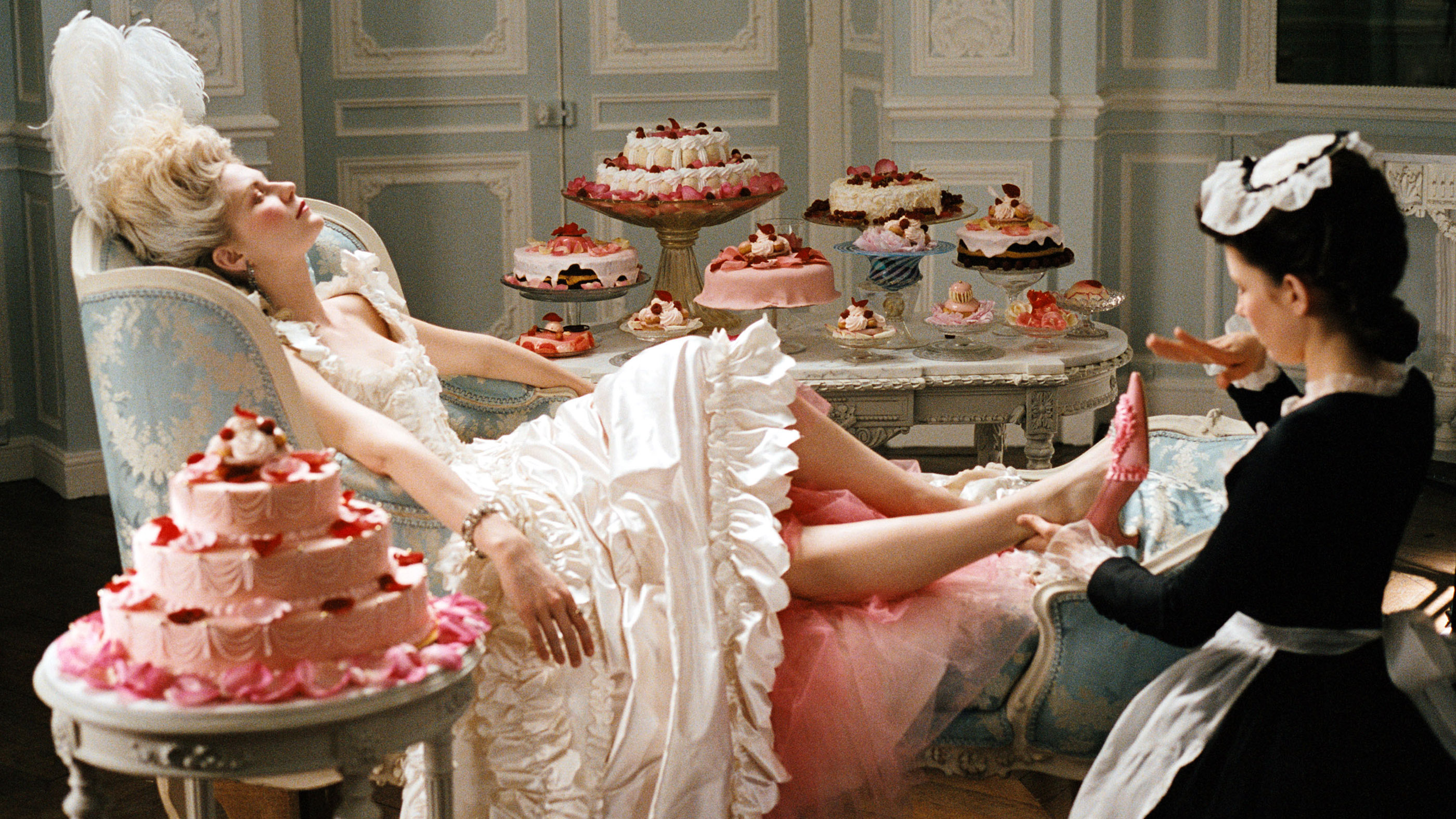
Let them eat cake - luxury, not wealth per se, triggering a revolution
Compliance
If the above moral considerations are insufficient to sway you, consider that sales taxes are also far more difficult to avoid than income taxes. Under my proposal, the heaviest tax burden will naturally fall on companies that manufacture big ticket items like fancy cars, boats and houses (since these are the main things that clear $1,000,000 per item). For example, Lamborghini cars would be subject to a 100% tax and therefore double in price.
An advantage of this system is that it’s essentially impossible for a company like Lamborghini to avoid this tax or engage in fraud, unlike a billionaire cooking up a personal return. Lamborghini already tracks how many cars it sells alongside thousands of other financial metrics in order to account for its profitability and report that to investors. These metrics are scrutinized by wall street every quarter. Cooking these books to avoid the tax is very difficult because all of the company’s statistics are related to each other and a move in one will show up elsewhere (for example if the company tried to underreport sales, then the costs of assembling its car would also have to be adjusted down to not distort the financials). Actually attempting this sort of fraud in real life would require the cooperation or silence of many executives and accountants. Additionally, a Lamborghini is a heavy physical object that can be audited by simply counting them up in the warehouse. Cooking the books or finding loopholes is therefore much harder for a company like Lamborghini than for some shady billionaire with a creative accountant.
Since sales taxes already exist, compliance rates can be empirically measured. Studies suggest that current state taxes in the US have lower avoidance rates of ~13% than the income tax at ~16%. In Europe, the analogous VAT tax (which functions similarly to a sales tax) has a lower noncompliance rate of 10%. There’s also good reason to believe that an exponential sales tax is even tougher to avoid than existing regimes, since the vast majority of sales tax fraud happens in small businesses, whereas big ticket luxury items are typically manufactured by large companies who have a harder time skirting the rules. I.e, in today’s world sales taxes are primarily avoided by mom and pop stores selling baked goods for cash - it’s much tougher for Lamborghini or McMansion Construction Group to pull the same stunt on a million-dollar car or home. These larger enterprises would in turn bear the brunt of the tax.
Efficiency
Besides allowing society to tax the frivolous, economics suggests that our tax system will be less damaging to economic growth than the current setup. A key economic finding about luxury goods is that they display the “Veblen effect”, which means that demand for these goods can sometimes increase with their price, contradicting the basic laws of supply and demand. What this implies is that if you tax incomes or basic goods, thereby increasing the price of stuff, then people will buy less stuff, which in turn hurts the economy. We generally accept this tradeoff because this moderate hit to the economy allows us to fund the government.
However, luxury goods are a prestige item and therefore a different story. If you can afford a Lamborghini, you can probably still afford to buy it at twice the price. Hence demand for Lamborghinis and other luxury goods is a lot less affected by price increases and taxes than any other item. Taxing luxury goods therefore hurts the economy less than other forms of taxation. The number of Lamborghinis sold remains high, unlike other items which go unsold if you jack up the price.

Administrative Simplicity & Realism
To tie out the various of features that make an exponential sales tax superior, note that this proposal is both significantly simpler than the current system (reducing administrative costs) and realistic, since sales taxes already exist in many nations worldwide. This simplicity primarily comes from eliminating other taxes and starting from scratch, alongside eliminating the need for personal income taxes. Granted, a steeply exponential system tied to the price of the item has never been tried, to my knowledge, but the machinery of state needed to administer this task is already in place, since most states already administer sales taxes. Additionally, most companies already track the relevant financial information needed to comply with our tax, meaning this is also not a particularly large administrative burden on the corporate world.
Imagine a world where no one has to file personal taxes at all, and everything is paid for and administered by major corporations at the point of sale. The government would save billions every year on just the costs of running the IRS, alongside preserving our sanity on tax season.
Objections Considered
Can an exponential sales tax generate sufficient income to fund the government?
Yes. In fact, various scientists have crunched the numbers on a federal sales tax in the United States and have figured out that a flat rate would have to average ~30% to replace current tax revenues. Of course, under our system the bulk of the tax would fall on more expensive items, so you might expect a median item to be taxed in the ~20% range (offset by luxury goods being taxed far in excess of 30%). If this gives you heartburn, remember that our exponential sales tax would replace income taxes, meaning that you’d keep 20% more money from your paycheck in the first place, and would not be taxed at all if you chose to save that money instead of spending it. You’re only worse off on a net basis if you’re a low earner and a high spender, in which case you should be scared.
Would a high sales tax short-circuit the economy? 20% sounds kind of high.
The average VAT (sales tax rate) in Europe is 21%, without this causing any particularly serious problems for the economy. The difference is that in Europe this tax is flat (same rate for all items irrespective of price) and exists in addition to income taxes instead of replacing them, hence higher taxes and lower growth in Europe overall.
Taxing luxury goods might harm certain industries
Good. I am personally quite willing to sacrifice Lamborghini’s profit margin to save everyone a headache on tax day. More seriously, a few factors make this a non-issue. Firstly, remember that the Veblen effect means that luxury good sales typically remain strong even after price increases. Because of this, Lamborghini sales are unlikely to suffer even if their prices are greatly increased by a tax. Secondly, consider that most luxury goods in the US are imported from Europe (handbags, cars, etc). It’s clear that taxing these items will hurt the European luxury goods industry. But frankly, who cares about them - this is a problem that will harm foreign economies disproportionately while benefiting our own.
Taxing goods will disincentivize consumption, hurting GDP
While this might be theoretically true, it’s also quite apparent that the US has an unbalanced economy that overemphasizes consumption ahead of savings and investment. Shifting the economy towards a greater emphasis on savings would likely benefit the US in the long run, even if it meant sacrificing some of the economic nitrous of American overconsumption. The idea of shifting the US towards greater savings to create balance has been well supported by many economists over the years, who frequently ring alarm bells about excess consumption.
Discrete tax thresholds might create rent seeking opportunities
Unlikely. The primary incentive for producers would be to simply knock down the price of items that are right on the tax threshold, creating mild, diffuse deflationary pressure. For example, consider a wine manufacturer selling bottles for $79, $109, and $159. This manufacturer might be incentivized to discount the $109 bottle to $99, since a $109 bottle is subject to 20% tax ($87.2 net) while a $99 bottle is subject to 10% tax ($89.1 net). So if you are selling a product right on the threshold it might make sense to provide a slight discount so the product lands in a lower tax bucket. This creates a somewhat funny situation where companies attempting to avoid the tax would be incentivized to lower prices for the consumer, an unexpected benefit of the system, if anything. If the abuse is consumer discounts, then let it be so.
Other harmful effects
It's worth restating that no tax system is completely harmless. Any tax will impact some subset of people and create economic distortions. Hence the question is ultimately who we choose to harm. Hopefully, I've now clearly outlined and fenced in who I intend to target with this tax - specifically those who overspend on luxury items and foreign companies scalping the American public on branded goods. This includes billionaires who overspend on flashy items (Bezos not Buffet), but also the middle class who purchase Gucci handbags on credit, and other such profligates. If you are concerned about this class of people then I cannot say much to convince you.
Conclusion
An exponential sales tax appears to both solve our thoroughly busted tax system and to mask over some of the warts of capitalism by reducing luxury spending. This proposal is not only advantageous, but does not require a particularly large imagination to implement, given that sales taxes already exist in many places, though none are exponential in the way described here. Given the absolute failure of our existing system, as evidenced by the utter inability of the federal government to fund itself without massive debt, is it not time for our generation to try something radically new?
Our inheritance
Back to all essays